Breast Biopsy
Understanding Your Breast Biopsy Options
If a breast lump or an abnormal area is found during a mammogram, ultrasound or MRI scan, a breast biopsy may be recommended to determine what the tissue changes represent.
At Luma Women’s Imaging Centre, breast biopsies are performed using appropriate imaging guidance and sampling techniques. The tissue samples are examined by a pathologist to help establish a diagnosis and guide the next steps in care.
The recommended biopsy depends on the location and appearance of the abnormality, your imaging findings and clinical assessment.
Types of Breast Biopsy
Different breast biopsy techniques are used to collect cells or tissue samples. Your doctor will recommend the approach most suitable for your findings.
1. Core Needle Biopsy (CNB)
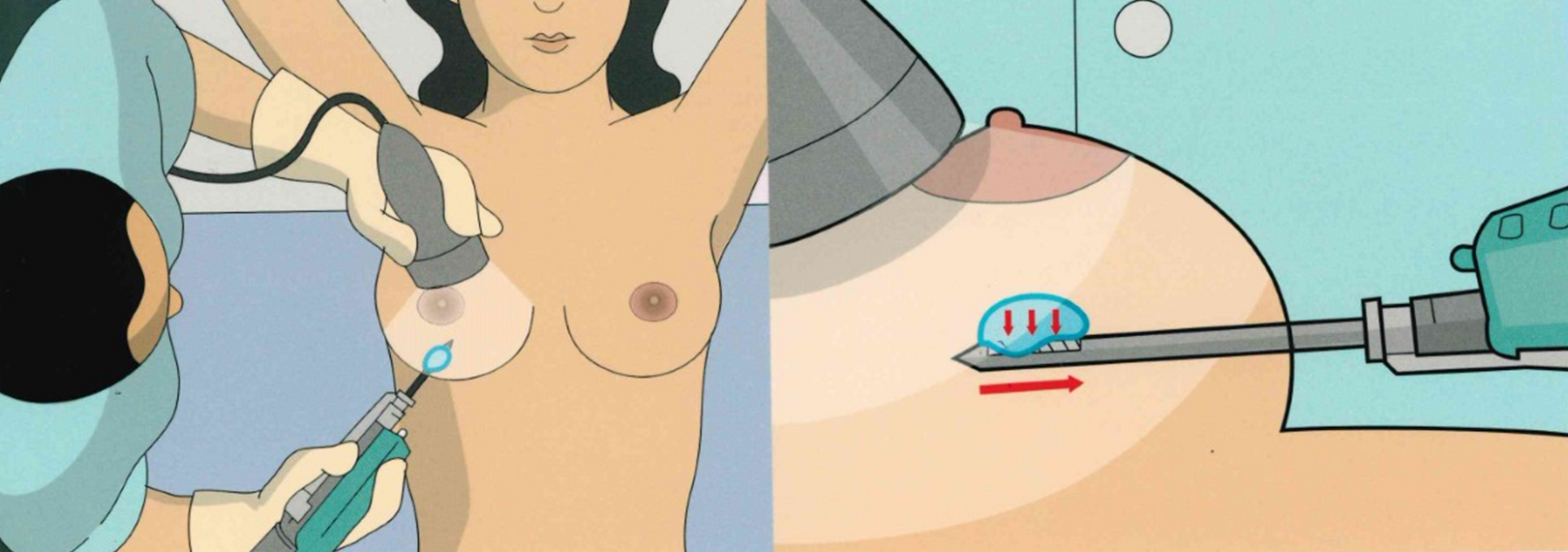
A core needle biopsy uses a hollow needle to remove small samples of breast tissue for examination. Local anaesthesia is usually administered to numb the area. Ultrasound, mammography or MRI may be used to guide the needle to the target.
2. Vacuum-Assisted Biopsy (VAB)
A vacuum-assisted biopsy uses a specialised needle connected to a suction device to collect multiple tissue samples through a small skin incision. Depending on the size and nature of the abnormality, it may also be used to remove certain small, benign breast lesions.
VAB is primarily a diagnostic procedure and is not a substitute for surgery to remove breast cancer. If cancer is diagnosed, your breast specialist will discuss the appropriate treatment options based on the findings.
3. Fine Needle Aspiration (FNA)
Fine needle aspiration uses a thin needle to collect cells or fluid from a breast lump or other targeted area. It may be suitable for selected cases, although it provides cells rather than the larger tissue samples obtained through a core needle biopsy.
The most appropriate method depends on the clinical question and the type of abnormality being investigated.
How Is a Breast Biopsy Performed?
Many breast biopsies are minimally invasive, image-guided procedures. The imaging method used depends on where the abnormality is best seen.
Ultrasound-guided biopsy: Uses ultrasound images to guide the needle towards an area visible on ultrasound.
Stereotactic or mammography-guided biopsy: Uses mammographic images to locate abnormalities, including certain areas of calcification that may not be visible on ultrasound.
MRI-guided biopsy: Uses MRI images to guide sampling of an abnormality that is best seen on MRI.
The radiologist will determine the appropriate guidance method based on your imaging findings.
What to Expect During a Breast Biopsy
Before the procedure
Your doctor will explain the recommended biopsy and any preparation required. Inform the team about your medical conditions, allergies and medications, especially blood-thinning medication. Do not stop prescribed medication unless instructed by your doctor.
Insurance and Letter of Guarantee (LOG)
If you intend to use insurance coverage, check with your insurer or agent whether your procedure is covered and whether a Letter of Guarantee (LOG) is required. Where applicable, arrange for the LOG before your appointment.
Coming with a companion
We recommend arranging for someone to accompany you, particularly if sedation is planned. If you receive sedation, you may need someone to take you home. Follow the instructions provided by our team regarding post-procedure care.
During the procedure
For most needle biopsies, the skin is cleaned and local anaesthesia is administered. The doctor uses the appropriate imaging method to guide the needle and collect tissue samples. You may feel a brief sting when the anaesthetic is administered, followed by pressure or some discomfort during the sampling.
The technique, positioning and duration vary depending on the type of biopsy.
After the procedure
A dressing is applied to the biopsy site. Mild soreness, swelling or bruising may occur for a few days.
You may need to rest and avoid strenuous exercise for 2-3 days, depending on the type of biopsy and your doctor's advice. Keep the wound clean and follow the dressing and wound-care instructions provided by our team.
Contact your care team if you have concerns about your recovery, particularly if you experience persistent bleeding, increasing swelling, worsening pain or signs of infection.
Most needle biopsies are performed as outpatient procedures and do not require an overnight hospital stay. At Luma Day Surgery Centre, breast biopsies can be performed with or without sedation, depending on the type of procedure and your clinical needs. Our team will advise you on the appropriate arrangements for your procedure and recovery.
Find out how to prepare for your biopsy
What Happens After a Breast Biopsy?
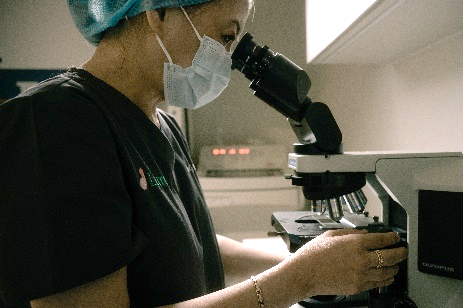
The tissue samples are examined by a pathologist, who prepares a report for your doctor. Your doctor will discuss the findings with you and explain whether further assessment, monitoring or treatment is recommended.
At Luma, radiology and pathology expertise supports the diagnostic process, helping your doctor interpret the findings in the context of your breast imaging and clinical assessment.
A biopsy recommendation does not necessarily mean that you have breast cancer. The purpose is to investigate the abnormality and establish a diagnosis.
Frequently Asked Questions About Breast Biopsy
-
No. A biopsy is performed to investigate an abnormality and determine whether it is benign or cancerous. The result will help your doctor advise on the appropriate next steps.
-
Local anaesthesia is usually used for needle biopsies. You may feel a brief sting when the anaesthetic is administered, followed by pressure or some discomfort during sampling. Mild soreness or bruising may occur afterwards.
-
Recovery varies according to the biopsy technique and whether sedation is used. Many patients return to their usual routine within a short period, although strenuous activity may need to be avoided temporarily. Follow the instructions given by your care team.
-
The time needed for a pathology report varies according to the procedure and the tests required. Your care team will advise when and how your results will be discussed.
-
Vacuum-assisted biopsy can remove tissue for diagnosis and may completely remove certain small, benign breast lesions. However, it is not intended as definitive treatment for breast cancer. If cancer is diagnosed, further treatment, including surgery, may be recommended depending on the individual case.
-
Not necessarily. Many abnormalities can be diagnosed through a needle biopsy without surgery. Further monitoring, additional sampling or surgery may be recommended depending on the pathology findings and whether they correspond with the imaging results.
Breast Biopsy: Patient Information Brochure
Download our brochure for a convenient overview of breast biopsy procedures at Luma, including information to help you prepare for your appointment.